
Ground Penetrating Radar
Ground penetrating radar uses electromagnetic signals to examine areas beneath soil, pavement, concrete, and other surfaces without requiring immediate excavation. The technology can help locate buried utilities, tanks, voids, pipes, and other subsurface features that could affect planned construction work. It also helps crews understand possible object depths, giving project teams useful information before digging, drilling, coring, or cutting begins.
Before ground disturbance starts, knowing what lies beneath the work area can reduce uncertainty and help crews plan safer construction activities. GPR works alongside electromagnetic locating, visual observations, and field experience to identify detectable subsurface conditions. This approach is useful across residential, commercial, industrial, and municipal projects where unknown underground features could cause delays, damage, additional costs, or difficult site conditions.
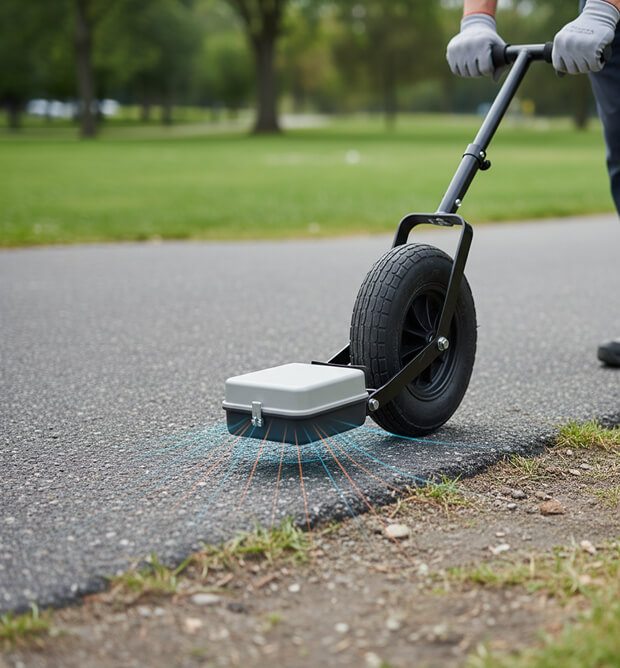
About Ground Penetrating Radar Services
Ground penetrating radar sends electromagnetic energy into the ground or another material and measures returning signals from subsurface objects and changes. These responses can indicate potential pipes, utilities, tanks, voids, buried materials, and structural features on site. Unlike methods that depend on detectable conductive signals, GPR can help identify certain non-metallic targets and other conditions that radio detection cannot identify through conductive signal detection alone during field investigations.
GPR scanning is non-destructive, so crews can investigate an area without immediately opening the ground to search for hidden obstacles. The equipment can also help estimate the depth of detectable targets, giving field teams additional information for planning excavation, drilling, boring, trenching, coring, or other ground-disturbing activities. Results depend on site conditions, target characteristics, access, interference, and equipment response during active site scanning operations.
Ground penetrating radar has practical value on job sites where underground uncertainty could affect planned work, including fence installation, septic projects, foundation work, directional boring, utility repairs, and commercial construction. It can also assist concrete investigations involving conduits, rebar, and post-tension components before concrete work begins. Combining GPR findings with markings, photographs, mapping, and written job documentation gives crews clearer information for planning their next steps.
Benefits of Ground Penetrating Radar Services
01. Non-metallic utility locating
GPR can identify detectable non-metallic utilities, tanks, voids, pipes, and buried materials before excavation begins on active construction job sites with fewer surprises for crews.
02. Obstacle depth assessment
GPR can help field crews understand how deep detectable obstacles sit, adding useful information for excavation, drilling, and boring plans today before work starts safely.
03. Non-destructive scanning
Non-destructive scanning lets crews investigate subsurface areas before opening soil, pavement, concrete, or other finished surfaces unnecessarily during construction work and repairs on site.
04. Subsurface project planning
Early subsurface information can help crews plan fence installation, septic work, boring, trenching, foundation projects, repairs, and construction activities efficiently on active project sites.
05. Comprehensive site reporting
GPR can complement electromagnetic locating, site observations, markings, photographs, mapping, and reports for clearer, more complete job-site information during project planning and field execution.
06. Large-area investigation
GPR can investigate larger areas without immediate excavation, helping crews assess potential underground obstacles before committing equipment, labor, and resources to digging operations.


Why Choose SitRep Services?
We bring veteran ownership, experienced technicians, and practical job-site knowledge to every locating project we accept. Our team combines GPR with electromagnetic locating and field observations to build a clearer picture of detectable subsurface conditions. We also focus on direct communication, practical markings, useful documentation, and responsive scheduling, helping contractors and property owners prepare before ground-disturbing work begins at the job site.
Our service approach centers on clear scope, straightforward pricing, and responsive communication from the initial request through field work and reporting. We can review job location, project scope, timing, site information, plans, and photos when preparing quotes. Competitive pricing, open availability, and optional mapping or documentation help clients choose an approach that fits their project requirements and specific scheduling needs.
Contact us today for a quote and to learn more about our Ground Penetrating Radar services.
Frequently Asked Questions
01. What can GPR locate underground?
GPR can help identify detectable non-metallic utilities, pipes, tanks, voids, buried materials, and other subsurface features beneath soil, pavement, and similar surfaces.
02. Can GPR determine object depth?
GPR can help estimate the depth of detectable targets, giving crews additional information for planning excavation, drilling, boring, trenching, and ground-disturbing work before work starts.
03. Is GPR useful before residential projects?
Yes, GPR can assist with fence installation, septic work, foundation repairs, additions, plumbing projects, and other residential ground-disturbing activities before construction begins.
04. Can GPR scan concrete?
GPR can assist with concrete scanning to identify detectable conduits, rebar, post-tension components, and embedded features before cutting, coring, or drilling.
05. Does GPR replace 811 utility locating?
GPR complements 811 and private locating by investigating detectable subsurface conditions that public utility marking does not cover on property or sites before disturbance begins.

Private Utility Locating
GPR & EM - GPS Mapping
Accurate Data
Safer Job Sites - Better Decisions
Services
-
Private Utility Locating
GPR Locating
Concrete Scanning
Utility Mapping
Ground Fault Locating
Service Area
Atlanta, GA
Western NC
Upstate, SC
GA, NC, SC, TN, AL, FL
Southeast Markets
Mobilization Rates Apply
Contact
New Remittance Address:
SitRep Services
ATTN Finance Office
PO Box 480
Sylva, NC 28779